
Reducing your ecological footprint doesn’t require changing everything overnight. A few targeted adjustments in diet, energy consumption, or the choice of household products are enough to transform an ordinary daily life into a healthier and more environmentally friendly lifestyle. The trap is to rely on green slogans printed on packaging without checking what they really mean.
Environmental claims on products: what the law has changed
Have you ever noticed terms like “biodegradable,” “environmentally friendly,” or “good for the planet” on a bottle of laundry detergent? Since decree n° 2024-316 of April 5, 2024, these terms are prohibited on packaging unless the manufacturer proves exceptional environmental performance recognized by regulations.
A European directive from February 28, 2024, reinforces this logic by qualifying generic environmental claims as misleading commercial practices. For a consumer wanting to adopt an ecological lifestyle, the consequence is direct: marketing slogans are no longer a valid criterion for choice.
It’s better to turn to standardized indicators. The energy label on appliances, the reparability index displayed since the AGEC law, or official environmental labels provide verifiable information. To delve deeper into these topics around well-being and responsible consumption, a useful resource is: https://www.bien-et-bio.info/, which addresses these issues comprehensively.
Reducing waste without going completely zero waste
Zero waste can be intimidating because it seems to require strict discipline. In reality, three or four specific changes can already significantly reduce the amount of waste produced.
Extended Producer Responsibility (EPR) and sorting: obligations that simplify the action
Extended Producer Responsibility (EPR) schemes have multiplied in recent years. Packaging, textiles, furniture, electronic devices, sports articles, toys: each EPR scheme funds the collection and recycling through an eco-contribution included in the product price.
In practical terms, this means that sorting becomes more efficient when the right scheme is identified. An old pair of jeans doesn’t go in the yellow bin, but in a textile collection point. A broken electrical device can be returned to the store or recycling center, where it will be processed for free.
Three adjustments that really matter
- Replace plastic bottles with a reusable water bottle and a filter jug. Tap water in France is regulated and costs a fraction of bottled water.
- Use reusable bags for shopping, as well as for bulk fruits and vegetables, instead of disposable thin bags.
- Favor refills over new containers for liquid soap, laundry detergent, or household products. Less plastic produced, less waste to manage.
These actions require no heavy reorganization. They simply replace one reflex with another.
Domestic energy consumption: priority areas to monitor
Heating remains the primary energy consumption item in a home. Lowering the set temperature by one degree measurably reduces the bill, without affecting actual comfort if the home is properly insulated.
Hot water is the second often underestimated item. Setting your hot water tank between 55 and 60 degrees limits consumption while preventing the growth of bacteria. Beyond that, energy is mainly used to heat water that will then be cooled at the tap.

Appliances and standby: the small consumers that add up
An appliance on standby consumes almost nothing individually. But add up the internet box, television, phone charger, desktop computer, game console: the cumulative consumption over a year is no longer negligible.
A power strip with a switch cuts power to several devices in one action. It’s simple, inexpensive, and eliminates phantom consumption without any daily effort.
When an appliance reaches the end of its life, the energy label remains the best indicator for replacement. A refrigerator rated A consumes significantly less than a model rated D or E, and the difference shows up on the bill from the very first year.
Healthy and ecological eating: better choices rather than complete bans
Eating healthily and reducing your environmental impact often involve the same choices. Local and seasonal products travel fewer kilometers, arrive fresher, and their cultivation outside heated greenhouses consumes less energy.
Not sure which fruits and vegetables are in season? Seasonal calendars published by consumer associations or local AMAPs provide a reliable reference, month by month.
Food waste: a concrete lever
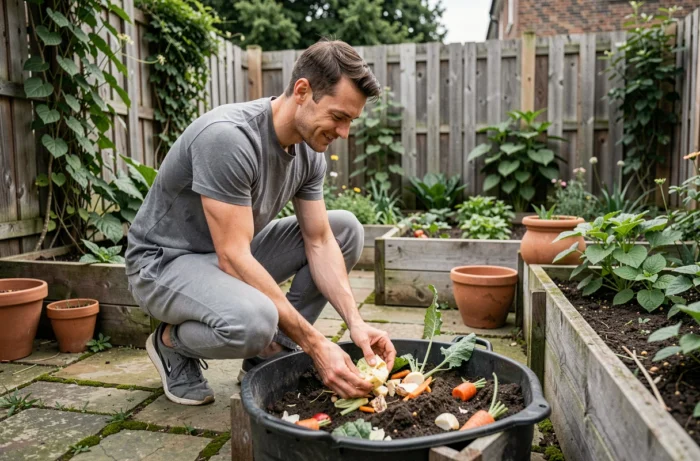
Food losses and waste represent a significant share of global greenhouse gas emissions, according to the United Nations Environment Programme. At the household level, planning meals for the week before shopping reduces impulse purchases and thrown-away food.
Freezing leftovers, using greens and peels in soup or broth, checking expiration dates before throwing away: these habits prevent food (and money) waste without sacrificing meal quality.

Daily mobility: adapting your trips without giving up the car
Not everyone lives next to a train station or bus stop. For those who rely on a car, a few choices can reduce carbon footprint without changing vehicles.
Carpooling for work, even twice a week, halves fuel consumption on those trips. Combining shopping into a single trip instead of making multiple short round trips also limits the kilometers traveled, often the most polluting because the engine remains cold.
For short trips in the city, biking or walking realistically replaces the car for distances under five kilometers. The associated physical activity directly contributes to a healthier lifestyle, without requiring a gym membership.
Adopting a healthy and ecological lifestyle daily does not mean living differently, but making more informed decisions about energy, waste, food, and transportation. Recent regulations on environmental claims make this work simpler: when slogans disappear, only the facts remain.