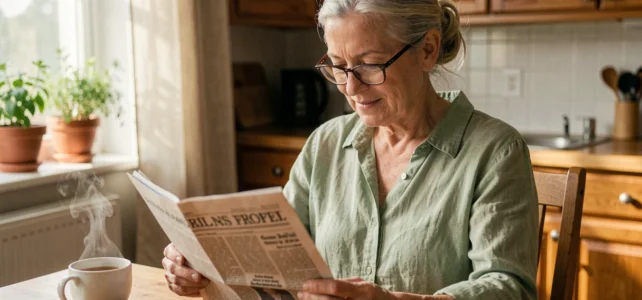
Retirement in France is not just a change in administrative status. It is a complete reorganization of daily life that affects housing, health, social connections, and financial resources. Living well in retirement requires knowledge of the concrete measures available, including those that have recently emerged, and making decisions tailored to one’s actual situation rather than following generic advice.
Citizen Consultation on Aging: Influencing Public Policies in 2026
Since the summer of 2026, a citizen consultation titled “Aging in France, Today and Tomorrow” has been opened on the government platform Agora, initiated by the ministry responsible for Autonomy and Disabled Persons. It remains accessible until September 20, 2026.
This consultation focuses on the daily quality of life of older people, the prevention of loss of autonomy, housing, nursing homes, employment, and support for seniors. Contributions will feed into a National Conference on Autonomy scheduled for autumn 2026.
Participating in this type of initiative allows retirees to directly influence public policies that shape their living environment. Analyses on these topics can regularly be found in articles on magazine-seniors.fr, which address the concrete challenges of daily life after active work.
Adapting Housing for Retirement: The Lesser-Known Tools of Retirement Insurance
The majority of retirees wish to stay at home as long as possible. The main barrier is not the desire but the inadequacy of housing to the physical constraints that evolve with age.

Retirement Insurance has launched a dedicated site, bien-chez-soi.lassuranceretraite.fr, which offers small equipment solutions to simplify daily life at home: grab bars, bathroom modifications, appropriate lighting. These changes do not require heavy construction and can be implemented gradually.
A second online tool, developed with Crédoc, allows individuals to assess whether their housing meets their current needs. The questionnaire “Is my housing suitable for my daily needs?” identifies weaknesses (stairs, shower access, door widths) and points to concrete solutions.
What Housing Adaptation Assistance Really Covers
Many retirees are unaware that they can benefit from financial support for these adaptations. Pension funds offer assistance based on income conditions, distinct from that of Anah. The first step is to contact one’s Carsat (Retirement and Occupational Health Insurance Fund) to learn about the applicable measures for their situation.
- The free online self-diagnosis helps identify fall risks before an accident occurs
- Small equipment (grab bars, non-slip mats, risers) is often partially covered by the pension fund
- A housing advisor can visit the home to assess priority modifications
Health Prevention After 60: The ICOPE Program and Personalized Follow-Up
The ICOPE program, promoted by the World Health Organization and relayed by Retirement Insurance in France, aims to assess five key functional abilities: mobility, memory, vision, hearing, and mood. The goal is to detect early decline before it becomes irreversible.

This program differs from traditional health assessments by its holistic approach. It does not seek to identify a specific illness but to measure the ability to perform daily tasks. A degraded result in any of the five areas triggers targeted support.
How to Access This Assessment
The ICOPE assessment can be done independently via a mobile app or with the help of a healthcare professional. The screening takes a few minutes and requires no prescription. One just needs to visit the Retirement Insurance website or ask their primary care physician.
Prevention remains the most cost-effective lever for maintaining autonomy. An uncorrected hearing problem, for example, accelerates cognitive decline and fosters social isolation. Detecting it early changes the trajectory of the following years.
Retirement Budget and Purchasing Power: What Changes Really
The issue of retirees’ purchasing power has been a topic of public debate for several months. Discussions around a possible under-indexation of pensions relative to inflation have sparked strong reactions.
Under-indexation means that pensions increase more slowly than prices, leading to a gradual loss of purchasing power. This mechanism, if applied, does not result in a nominal decrease in the pension but in a real erosion of the budget available each month.
- Checking each year the rate of pension revaluation against actual inflation helps measure the real gap
- Retirees with modest incomes may benefit from complementary aids (Aspa, housing assistance, energy aids) that are often underutilized
- The Retirement Insurance simulator allows recalculating rights in case of partial resumption of activity

Resuming Paid Work After Retirement
Combining work and retirement remains an option to supplement income. The rules have evolved in recent years, making this possibility more accessible. Any activity resumed after the liquidation of rights now generates new pension rights, which was not the case before.
Before committing, it is advisable to check the applicable cumulative limits for one’s regime and ensure that resuming activity does not alter the calculation of certain social aids.
Living one’s retirement daily in 2026 means navigating a changing regulatory framework, lesser-known public tools, and financial decisions that require regular monitoring. The measures exist, but they do not seek out beneficiaries: it is up to each retiree to take advantage of them.