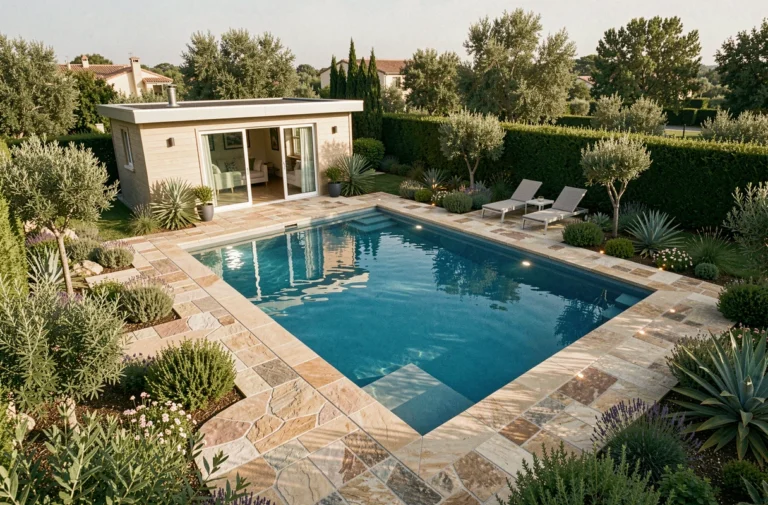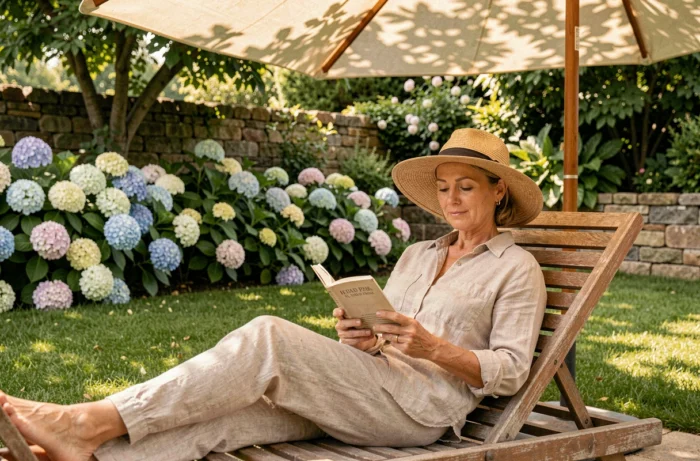
A deck chair placed on a flat lawn, a wobbly table, and a parasol that flips over at the first gust of wind: we’ve all experienced that garden that promises relaxation but mostly delivers frustration. Truly enjoying a stay in the garden, whether for a vacation rental or at home, requires addressing some concrete issues before thinking about decoration. Outdoor comfort relies on targeted equipment, not on an accumulation of accessories.
Protection from wind and rain: the real first equipment for the garden
We first think of shade when setting up an outdoor space. This is a misjudgment of priorities. Wind can ruin an evening much faster than the sun.
Pergolas equipped with side screens address this specific problem. They allow you to block the wind without completely closing off the view, which extends the use of the garden well beyond summer. In the shoulder season, when temperatures remain pleasant but gusts make the outdoors inhospitable, this type of installation radically changes the number of days you can actually use your terrace area.
Before investing, check a point often overlooked: a terrace cover may require prior declaration or a permit depending on the area created. The thresholds vary from one municipality to another based on the local urban plan (PLU). Inquiring at the town hall before starting work avoids costly administrative setbacks.
For those who offer their garden for vacation rentals, this is a strong selling point. Travelers booking a stay with outdoor space expect to be able to enjoy it even in mixed weather. A garden protected from the wind transforms the experience much more than high-end furniture exposed to drafts.
You can find a selection of equipment from the Escapades aux Jardins site that ranks these protections among the top priorities for setup, before furniture or decor.
Outdoor lighting: multiple low sources rather than a spotlight
A garden without suitable lighting empties as soon as the light fades. The classic mistake is to install a single powerful spotlight that dazzles more than it illuminates and attracts all the insects in the neighborhood.
Recent developments go in the opposite direction: multiplying low-intensity sources at different heights. String lights stretched between two anchor points, solar bollards along a path, lanterns placed on the table. Each source covers a specific use without flooding the rest of the garden with light.
This principle has a direct practical advantage for conviviality. Soft ambient lighting encourages people to stay outside after a meal. Aggressive central lighting instinctively pushes people to go inside.
Light pollution and neighbors
Poorly oriented lighting can become a source of conflict. Low bollards and string lights naturally limit light dispersion towards neighboring properties. This is a detail to keep in mind, especially in densely populated residential areas or condominiums where regulations may govern outdoor installations.
Garden furniture and relaxation area: choose durability over style
Garden furniture is where the most purchasing mistakes are made. People choose from catalogs in summer without thinking about winter storage or UV resistance.
Three criteria effectively filter the options:
- Weight: furniture that is too light gets blown away by the wind and ages quickly. Too heavy, and you never move it, reducing the garden’s modularity.
- Material against UV and moisture: aluminum and woven resin resist without maintenance. Untreated wood grays in one season, which is fine if you accept the patina.
- Off-season storage: if you don’t have a garden shed, stackable or foldable furniture becomes a priority, not optional.
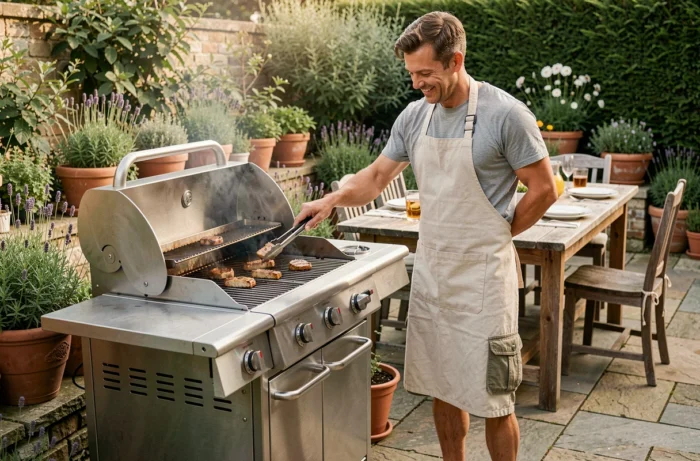
For a vacation rental, the outdoor table with enough seating for the group is the first piece of convivial equipment. Not the barbecue, not the hammock. A stable table, at the right height, with enough seating. The rest comes after.
Rainwater harvesting: a common but regulated equipment
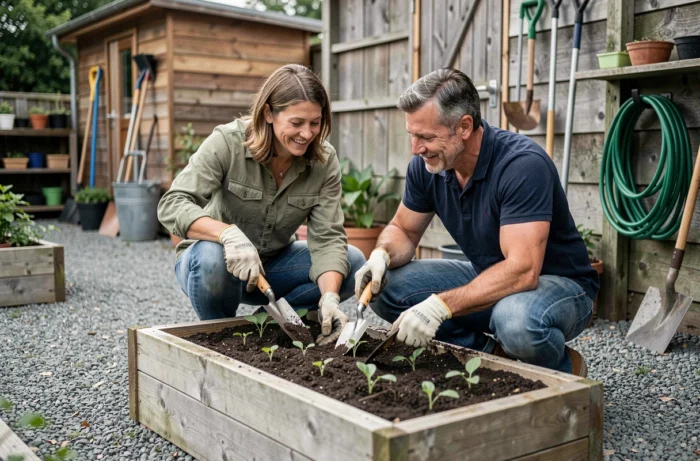
Watering a garden with drinking water is expensive and makes no ecological sense. Rainwater harvesting has become widespread, to the point that some local authorities actively support it. The city of Cachan distributed 6,000 collectors in 2025 and offers an additional 7,000 in 2026.
The collected water is used to water the garden and clean outdoor surfaces. However, the installation must remain strictly separate from the drinking water network. This is a legal obligation, not a recommendation. Failure to comply with this separation exposes you to penalties.
Constraints in condominiums
A collector placed on a balcony or in a common area may be subject to condominium regulations. It must not create a risk for neighbors or the drinking water network. Feedback on this point varies according to property managers, but it is better to obtain written agreement before installing anything in shared spaces.
Often overlooked comfort accessories for a stay in the garden
Beyond the large equipment, a few inexpensive accessories significantly enhance the experience of an outdoor space:
- A removable shade sail, more flexible than a parasol and adjustable according to the sun’s path throughout the day.
- Outdoor cushions with water-repellent covers, which transform a basic bench into a real relaxation area.
- A small cart or serving trolley on wheels to avoid back-and-forth trips between the kitchen and terrace during meals.
- A lightweight blanket for cool late evenings, especially in vacation rentals where travelers may not always think to bring one.
The comfort of a stay in the garden lies in these practical details, not in the accumulation of large equipment. A space protected from the wind, properly lit in the evening, with a stable table and a few well-thought-out accessories covers the vast majority of needs. Each additional item should address a concrete problem, not a decorative desire.