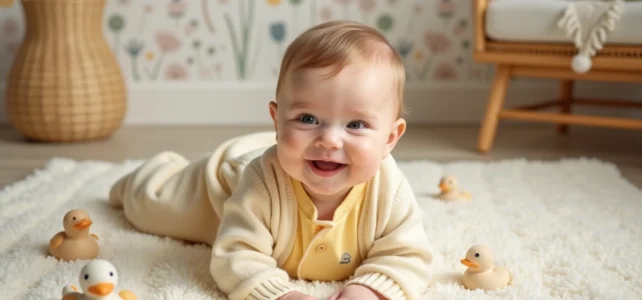
The weight of the jersey, the type of closure, the fit suitable for the diaper: these technical details separate a simply pretty baby garment from a piece that is truly wearable every day. We observe that the current trend in baby fashion merges textile requirements with aesthetic choices, complicating the sorting for parents who want to dress their child stylishly without sacrificing comfort.
Textile certifications and weight: what makes a baby garment truly high-quality
An organic cotton without certification guarantees nothing. The label GOTS (Global Organic Textile Standard) covers the entire chain, from the cotton field to dyeing, imposing strict thresholds on chemical residues. The OEKO-TEX Standard 100 certification, on the other hand, focuses on the finished product and tests for the presence of harmful substances in contact with the skin.
We recommend checking these labels directly on the inner label, not just on the online product sheet. A GOTS-certified cotton bodysuit with a sufficiently dense weight offers significantly better machine durability than fine jerseys that pill after three washes.
This dimension of “responsible style visible on the label” remains underutilized by mainstream guides, which merely mention organic cotton without distinguishing between certification levels. On lesbebesfringueurs.fr, the selection specifically incorporates this textile filter, making it easier to identify reliable pieces.
The choice of material also affects how the garment falls. A fabric that is too thick can weigh down an infant’s silhouette, while a well-calibrated interlock structures a romper or a two-piece set without rigidity.
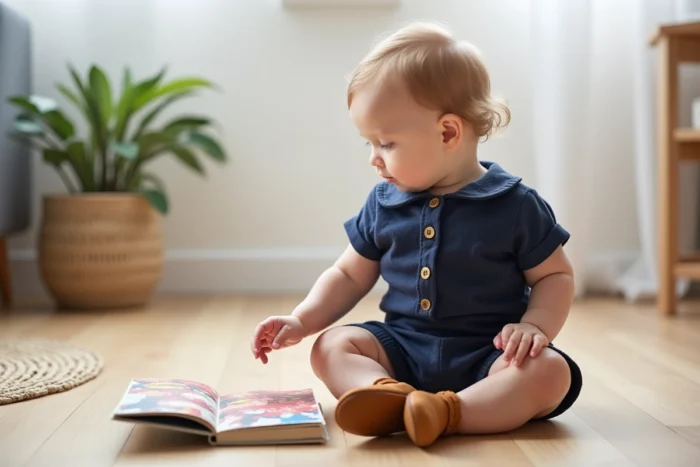
Expressive unisex fashion: going beyond beige with animal and nature prints
The unisex baby wardrobe is no longer limited to dull neutral tones. Recent collections combine soft bases (mint, lavender, soft gray) with stylized animal prints (bears, rabbits) or nature-inspired patterns like graphic leaves and flowers.
This approach allows for a wardrobe that can be passed down between children without falling into chromatic monotony. The principle is simple: a solid bottom paired with a strong printed piece creates a recognizable look without overloading.
- A solid lavender legging with a soft leopard print bodysuit creates a trendy and unisex outfit, reusable regardless of the gender of the next child.
- A greige linen romper paired with a printed foliage t-shirt works from birth to walking, provided you choose an adaptable fit.
- A sage-colored sweatshirt and pants set, enhanced by a bear-ear hat, is enough to create a complete look without multiplying pieces.
Focusing on a limited palette of three to four neutral colors simplifies combinations and reduces the volume of the wardrobe. Fewer pieces, more looks: that’s the winning calculation when growth requires renewal every two to three months.
Adaptive baby clothing: the fit that accommodates growth
Clothing with expandable sizes represents a notable technical shift. The principle relies on cuffs at the ankles and wrists, wide elastic waistbands, and repositionable snap buttons that allow a single piece to cover multiple sizes.
A well-designed adaptive garment can accompany a baby through two to three sizes, reducing the frequency of purchases and storage volume. We observe that this trend responds to both economic and aesthetic logic: fewer ill-fitting pieces that float or compress.
The adaptive fit requires a specific pattern. A simple addition of cuffs to a standard model is not enough. Brands that master this segment work on ease at the diaper level (reinforced and widened crotch) and ensure armholes that do not rise when the garment is in “large size” position.
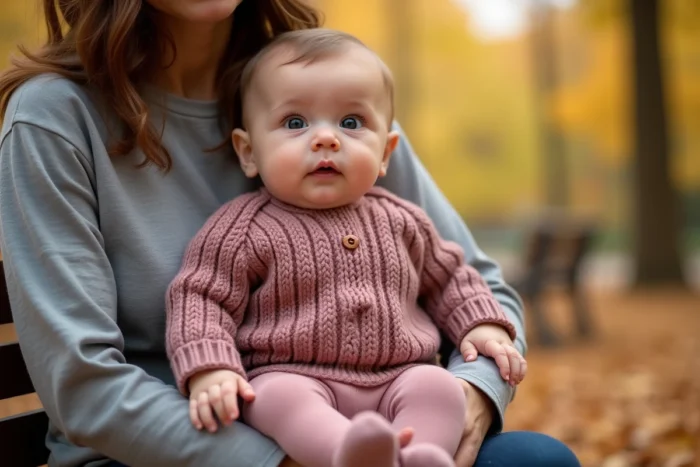
Closures and snaps: the detail that changes daily life
A crossover neck bodysuit avoids passing over the head, simplifying diaper changes and reducing crying. Resin snaps withstand repeated washes better than metal snaps, which can oxidize or irritate the skin around the belly.
For pajamas, the two-way zip closure (which opens from the bottom) allows for diaper changes without fully undressing the child. This technical detail, rarely mentioned in style guides, makes all the difference at three o’clock in the morning.
Creating complete baby outfits with few pieces
A functional and stylish wardrobe for a baby can fit into about fifteen pieces per size range. The classic trap is to accumulate “cute” tops without thinking about matching bottoms, leading to incoherent combinations.
- Five to six bodysuits (including two long-sleeved ones) in solid colors form the base. Prefer American or crossover necklines for newborns.
- Three bottoms (leggings, rompers, or elastic-waist pants) in shades compatible with all tops.
- Two to three “signature” pieces (a printed sweatshirt, a cotton gauze romper, a knitted cardigan) that set the stylistic tone.
- Accessories (hats, socks, headbands) complete the look without straining the budget. A knitted hat with an animal pattern is enough to transform a basic outfit.
Each piece should be able to combine with at least three others to justify its place in the drawer. This capsule wardrobe principle, borrowed from adult fashion, applies perfectly to baby outfits and prevents the accumulation of clothes worn only once.
The choice of baby outfits is not just a matter of appearance. Certified textile quality, adaptive fit, and the capsule wardrobe logic form a triptych that allows dressing a child stylishly while managing the renewal imposed by rapid growth in the early months.